University route guide
DFAT Authentication of UNSW My eQuals Degree and Transcript
A report-style guide for UNSW academic records that explains My eQuals handling, route uncertainty, document setup, and the next steps before intake.
UNSW searches are usually made by users who already have a real academic file and want a route answer, not generic legalisation theory. The working question is whether the available My eQuals record, share link, or institution-issued PDF can move into a DFAT-facing route that the overseas receiver is likely to accept.
For EGS, the review point is not the school name alone. The route still depends on the exact document version, the destination country, the receiving authority, and whether the receiver is asking for apostille, authentication, legalisation, attestation, or a direct institutional verification path. That is why the route is confirmed after review rather than assumed from the query alone.
Key points summary
- UNSW academic files should be reviewed as issue-format questions, not only as school-name questions.
- The safest route language comes from the destination and receiver instruction, not from a generic university apostille assumption.
- Digital convenience does not eliminate review of destination acceptance, translation needs, or extra downstream stages.
What apostille / authentication usually means here
In broad terms, an apostille is used under the Hague Apostille Convention to authenticate the origin of an eligible public document for use in another participating jurisdiction. In Australian practice, DFAT handles apostilles and authentications for eligible documents, but that does not mean every file a client holds is automatically ready for that stage.
The working issue is usually whether the document is the correct document class, whether it carries the right issuing structure, and whether the destination authority is actually asking for an apostille route, an authentication route, or some broader legalisation sequence. That is why this guide treats the route as review-led rather than keyword-led.
Who this guide is for
- Graduates or students holding UNSW academic records who need a practical route assessment for overseas study, licensing, employment, migration, or file completion.
- Users who can access My eQuals but are unsure whether the digital issue format is enough for the receiving authority.
- Clients comparing apostille, authentication, legalisation, and attestation wording and needing the route checked against the actual destination use.
What this document or record usually is
UNSW files are usually assessed as issuer-origin academic records. The practical question is whether the file in hand is the institution-issued degree, transcript, graduation statement, or another formally issued academic record rather than an informal student copy.
In academic matters, the document is usually being reviewed for provenance, completeness, and destination fit. The route rarely turns on the academic content itself.
Where the receiver is likely to review the degree and transcript together, the document set should usually be prepared as a pack rather than as isolated uploads.
Common document types covered
- UNSW My eQuals testamur or degree record
- UNSW My eQuals academic transcript
- UNSW graduation statement or completion statement where issued
- Issuer-provided PDF or hard copy supplied outside My eQuals where the digital route is incomplete
Typical route overview
For Australia-issued academic records, the usual assessment starts with whether the document is an eligible institution-issued academic file and whether the receiving side needs DFAT legalisation of that file or some different upstream step. In practice, the route often turns on document provenance rather than the academic content itself.
If the document is available through My eQuals or another verifiable issuer pathway, review is usually faster because the institution source is clearer. If the student only has a screenshot, downloaded preview, or informal copy, extra document preparation may be required before any DFAT-facing step is considered.
- Route naming should be matched to the destination, not to the university query alone.
- A clear digital issue path usually reduces review friction, but it does not replace destination-side acceptance checks.
- Private translations, loose scans, and unofficial student portal captures do not usually answer the core admissibility question.
What we usually need before review
- UNSW issuer-generated degree or transcript file or the My eQuals access path
- Country of use and the specific authority receiving the document, if known
- Any evidence of whether the receiver wants legalisation, authentication, attestation, or direct source verification
- Whether the student also needs a completion or graduation record
Digital / My eQuals notes
My eQuals is relevant only when the institution has issued the specific academic file through an official, shareable, verifiable format. A screenshot of the student dashboard is not the same thing as the issuer-generated record.
Where a share link, issuer PDF, or verifiable record exists, EGS typically reviews that version first because it gives a clearer view of source, completeness, and likely downstream handling options.
If the receiver insists on hard-copy presentation or an institution-sealed version, the digital path may still need to be supplemented.
Original hard-copy notes
If the academic file is not available in a usable digital format, the next practical question is whether the institution can issue a fresh hard copy or another verifiable version.
Original hard-copy academic documents may still require separate review because some receiving authorities care about issue format, certification path, or translation sequence, not just whether the paper is genuine.
What this route is actually checking
For academic records, the receiving authority is usually not interested in the academic subject matter. The practical issue is whether the file presented is an official institution-issued record and whether the downstream authority recognises the legalisation or verification path attached to it.
That distinction matters because a genuine degree can still be unusable if the file version is wrong. A commemorative certificate, student portal image, or cropped PDF can create the appearance of having the document while still failing the route test.
What My eQuals changes in practice
My eQuals often improves the review process because it gives a cleaner chain back to the issuing institution. It can reduce the need to re-request paper documents in cases where the receiver accepts a digital-origin academic record that is then handled through the appropriate route.
It does not remove all uncertainty. Some universities, employers, regulators, or migration bodies still ask for a particular issue format, a translation step, direct source verification, or a route other than the one the client originally assumed.
- Check whether the exact file was issuer-generated or only downloaded from a student interface.
- Check whether the receiving authority asks for apostille wording, broader legalisation wording, or direct academic verification.
- Check whether the receiver needs both the degree and the transcript, not one alone.
Common scenario differences
Study, licensing, employment, and migration cases often look similar at first but differ at the acceptance stage. A university admissions office may accept a route that a professional regulator or a consular post will not.
The same academic document may therefore follow different downstream handling depending on the destination country and the institution reviewing it. EGS treats the route as a document-plus-destination review problem, not a title-only problem.
Common rejection risks or review flags
- Using an incomplete or informal UNSW file such as a screenshot, preview, or cropped download.
- Sending only the degree or only the transcript when the receiving authority is likely to want the full academic pack.
- Assuming destination acceptance without checking whether translation, direct source verification, or a different route label applies.
What customers should prepare before intake
- The My eQuals share, issuer PDF, or clear scan of the academic file
- Destination country and, if known, the receiving university, employer, regulator, or migration body
- Whether the receiver asked for apostille, authentication, attestation, legalisation, translation, or direct university verification
- Whether both the degree and the transcript are needed
Timeline notes
Timing is usually driven first by document readiness and only then by the downstream legalisation stage. If the file needs to be re-issued, re-shared, or reformatted, that setup period often matters more than the headline processing window.
Any timeframe discussed before review should be treated as indicative only. Final timing depends on the issuing format, the destination route, courier steps where relevant, and whether a consular stage is also required.
Fee notes
Fees depend on the actual route confirmed after review, not the university keyword alone. Some files move on a relatively direct documentation path, while others involve additional preparation or downstream certification stages.
EGS quotes as an independent administrative intermediary. Fees do not imply that EGS is the certifying authority, a notary, or a government office.
When extra steps may be required
- Where a transcript contains multiple pages, completeness matters. Partial uploads often delay route review.
- Employer verification cases may differ from migration or professional registration cases.
- If the academic pack is being used in a non-Hague destination or a consular chain, extra stages may be required.
下一步
在阅读之后,把判断推进到 route check 或 intake
Typical next step
Prepare the issuer-generated academic file, note the destination country and receiving institution, then move into route check so the handling path can be confirmed against the actual record rather than the search term.
What to prepare before intake
- The My eQuals share, issuer PDF, or clear scan of the academic file
- Destination country and, if known, the receiving university, employer, regulator, or migration body
- Whether the receiver asked for apostille, authentication, attestation, legalisation, translation, or direct university verification
- Whether both the degree and the transcript are needed
Route uncertainty note
Academic routes are not determined by institution name alone. The route is typically confirmed after review of document format, destination, receiver wording, and any extra step such as translation or consular handling.
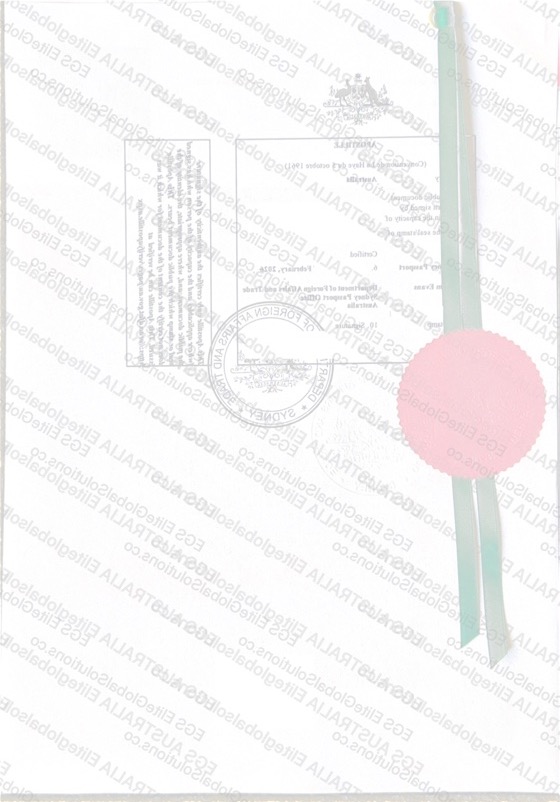 Australian Academic Document for Use in Singapore
Frequently asked questions
Does UNSW being on My eQuals automatically mean apostille is available?
No. A usable My eQuals file can improve document readiness, but the final route still depends on the destination, the receiving authority, and the issue format actually presented for review.
Can I use only a screenshot or downloaded preview from my student account?
Usually that is not the best place to start. Review is normally stronger when based on an issuer-generated file, share link, hard copy, or another version that shows a clear institutional source.
Does EGS decide whether the document is legally accepted overseas?
No. EGS is an independent administrative intermediary. Acceptance is always determined by the receiving authority and the route confirmed after review.
Compliance note
EGS is an independent administrative intermediary only. EGS is not a law firm, not a public notary, not a government authority, and does not provide legal advice. Route outcomes depend on the issuing country, destination country, authority rules, receiving-side requirements, and the document setup reviewed.