Inbound route guide
Overseas-Issued Documents for Use in Australia
A route map for foreign-issued documents being used in Australia, including what is usually done in the issuing country, what Australia does not usually do, and what to prepare before review.
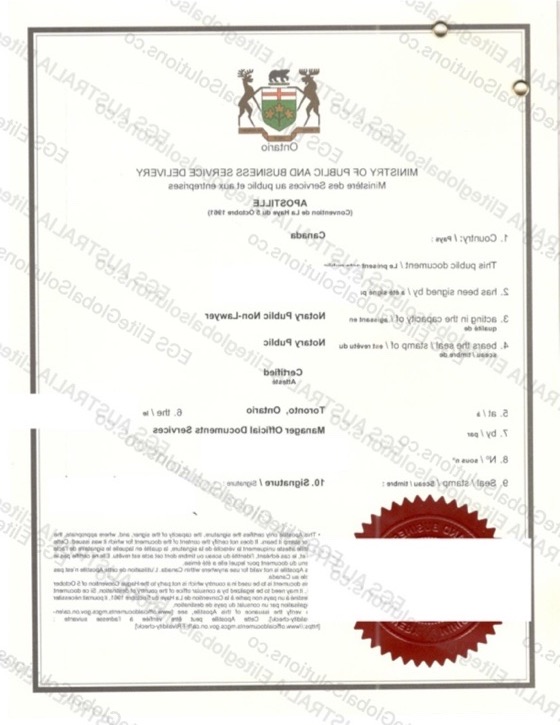
Overseas-Issued Documents for Use in Australia is usually searched by users who are working backwards from an Australian filing requirement. The central issue is often misunderstood: Australia does not usually convert a foreign document into a domestic Australian public document. The upstream legalisation step, if required, is commonly completed in the issuing country before the file is used in Australia.
That means practical review starts with the source country, issuing body, and Australian receiver. The useful answer is usually a route map: what must be done before the document leaves the issuing country, whether an apostille or another certification path is relevant there, and what additional translation or supporting evidence may still be needed once the file reaches Australia.
Key points summary
- Australia usually receives foreign documents; it does not usually convert them into Australian public documents after the fact.
- The crucial legalisation step, if needed, is commonly completed in the issuing country before the document is used in Australia.
- Translation, certified translation, and receiver-specific acceptance rules in Australia can matter as much as the upstream apostille or authentication step.
How to read this route
When a document was issued outside Australia and is being used in Australia, the main certification question usually belongs to the issuing country first. Australia is commonly the destination, not the state that authenticates the origin of the foreign document after the fact.
That is why this guide focuses on source-country handling, translation, and Australian receiver expectations together. The practical route is usually confirmed after review of the issuing country, the current document form, and the Australian filing purpose.
Who this guide is for
- Individuals and businesses preparing foreign-issued documents for Australian migration, licensing, education, court, employment, banking, or registry use.
- Users who are unsure whether the document needs an apostille or another legalisation step in the issuing country before it comes to Australia.
- Applicants who already have the foreign document in Australia and need to know whether any upstream stage was missed.
What this document or record usually is
Overseas-issued documents for use in Australia are usually reviewed as foreign-origin records first. The practical issue is commonly what upstream handling belongs to the issuing country before the file reaches the Australian receiver.
A foreign-issued file does not usually become an Australian public document just because it is brought into Australia. Translation, certification, and receiver acceptance need to be assessed separately.
The most reliable route review often starts with the issuing authority, the current document chain, and the Australian receiving purpose together.
Common document types covered
- Foreign birth, marriage, death, and other civil registry certificates
- Foreign academic records and company documents
- Foreign police checks, declarations, and notarised private documents
Typical route overview
For foreign-issued documents used in Australia, the usual first question is not what Australia can stamp now. It is whether the document needed an apostille, authentication, notarial act, or other certification in the issuing country before arriving here.
Once the upstream position is clear, the next review point is Australian destination use. Some Australian receivers mainly care about translation and document legibility, while others need a more formal upstream chain from the issuing country. That is why route confirmation starts with the source-country lane and the Australian receiving body together.
- Upstream step in the issuing country first.
- Australian receiver requirements second.
- Translation and certified translation often sit alongside, not after, the main route decision.
What we usually need before review
- Clear scan of the foreign-issued document
- Issuing country and, if known, the authority or institution that issued it
- Australian receiving body and purpose of use
- Any existing apostille, legalisation, notarisation, translation, or consular paperwork already attached to the file
What Australia usually checks and what it usually does not
Australia is often the destination, not the issuing state. That means the legally significant certification step often belongs to the country that issued the document, not to the Australian destination authority.
This is the most important point for users who already hold the foreign document in Australia and assume a domestic Australian certification step can replace the upstream source-country route.
Why destination use in Australia still matters
Even when the upstream chain is clear, the Australian receiver may still impose its own document expectations. A migration filing, university admission, regulator, or court can each ask for different supporting evidence or translation standards.
That is why route review does not stop at “has apostille” or “no apostille”. The downstream Australian use still needs to be assessed.
Typical file-preparation checklist
The most useful intake pack usually includes the foreign document, any existing certification pages, any translation, and a clear statement of the Australian purpose. Without those pieces, route review often becomes too abstract to be reliable.
Common rejection risks or review flags
- Assuming a Overseas-issued document can be put through an Australian route without checking the issuing-country formalities first.
- Ignoring translation, supporting records, or Australian receiver-specific acceptance rules.
- Relying on a country-level assumption instead of the exact source document, issuing authority, and Australian destination use.
What customers should prepare before intake
- Clear scan or PDF of the foreign-issued document
- Issuing country and, if known, the exact authority or institution that issued it
- Australian destination use such as migration, licensing, court, school, employment, or corporate filing
- Whether the Australian receiver has asked for translation, certified translation, apostille, notarisation, embassy certification, or direct source verification
Timeline notes
Timing depends on whether an upstream step was already completed in the issuing country. If not, the file may need to be routed back into the source-country lane before it can be used confidently in Australia.
Any timeframe discussed before review should be treated as indicative only because foreign document routes vary heavily by issuing country and Australian receiving body.
Fee notes
Fees depend on whether the route is mainly an Australian-side review and translation matter or whether the document still needs upstream handling in the issuing country.
EGS coordinates administratively as an independent intermediary and does not act as the certifying authority.
When extra steps may be required
- Certified translation may be required where the document is not in English or where the Australian receiver insists on a particular translation standard.
- Some Australian receivers rely heavily on the source-country apostille or legalisation, while others focus on translation and document clarity.
- If the original chain was not completed before the document left the issuing country, the file may need to return to that upstream route.
下一步
在阅读之后,把判断推进到 route check 或 intake
Typical next step
Collect the foreign-issued file, identify the Australian receiving body, and confirm whether the upstream step must be completed in the issuing country before the document is sent or used in Australia.
What to prepare before intake
- Clear scan or PDF of the foreign-issued document
- Issuing country and, if known, the exact authority or institution that issued it
- Australian destination use such as migration, licensing, court, school, employment, or corporate filing
- Whether the Australian receiver has asked for translation, certified translation, apostille, notarisation, embassy certification, or direct source verification
Route uncertainty note
Foreign-document use in Australia is route-sensitive. The correct path is typically confirmed after review because some files need upstream handling in the issuing country, while others turn mainly on translation, identity matching, or receiver-specific acceptance rules in Australia.
Related sample library items
 Canadian Police Check for Use in AustraliaRedacted sample preview for a commonly reviewed overseas document path. Final handling still depends on the receiving side and the document setup.
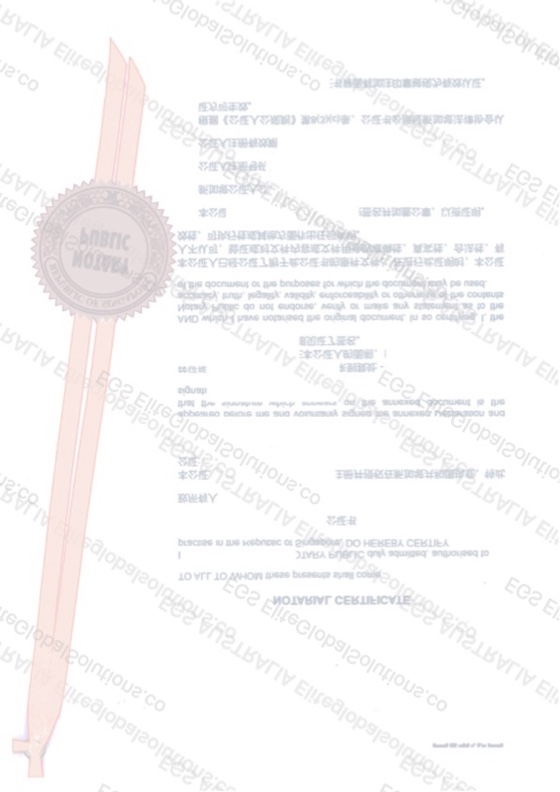 Singapore-issued Declaration for Use in AustraliaRedacted sample preview for a commonly reviewed overseas document path. Final handling still depends on the receiving side and the document setup.
Frequently asked questions
Can Australia apostille a foreign-issued document after it arrives?
Usually the key certification step belongs to the issuing country, not to Australia. The correct route depends on the source country and the Australian receiving requirement.
If the document is already in English, is that enough for Australia?
Not always. Some Australian receivers still care about how the document was issued and what upstream certification, if any, was completed in the issuing country.
Does EGS provide legal advice on Australian acceptance?
No. EGS is an independent administrative intermediary only. Final acceptance depends on the issuing country, the Australian receiver, and the document setup reviewed.
Compliance note
EGS is an independent administrative intermediary only. EGS is not a law firm, not a public notary, not a government authority, and does not provide legal advice. Acceptance in Australia depends on the issuing country, the Australian receiving authority, translation requirements, and the final document setup reviewed.