Police document route
Australian Digital National Police Certificate Apostille
The AFP Digital National Police Certificate is increasingly used for overseas migration, employment, and licensing matters. This guide explains how the digital format interacts with DFAT apostille, what destination countries typically require, and how EGS completes the process within 1 business day.
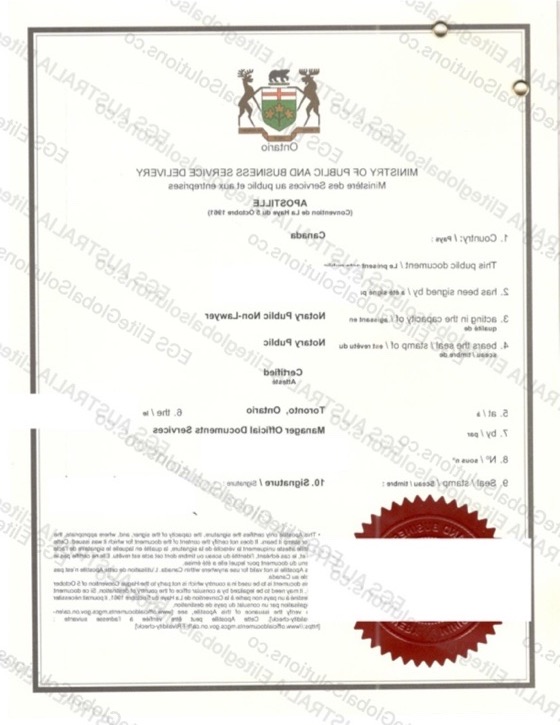
The Australian Federal Police now issues the National Police Certificate in digital format for most standard name-based applications. While this makes the certificate faster to obtain, digital format introduces an additional practical question: whether the destination authority, embassy, or receiving institution will accept a digitally issued document for apostille or legalisation purposes.
This guide explains the route for the AFP Digital National Police Certificate for overseas use, including when digital format is accepted, how DFAT Apostille applies, what fingerprint-supported applications are and when they are needed, and how EGS handles the preparation and submission.
Key points summary
- The AFP Digital National Police Certificate is the standard output for most name-based applications and is accepted by DFAT for apostille purposes.
- Destination-country acceptance of a digitally issued certificate varies — some receivers require a certified paper chain or confirmation that the certificate is the official AFP-issued record.
- EGS has completed AFP Digital National Police Certificate apostille handling within 1 business day for reviewed and ready files.
What apostille / authentication usually means here
In broad terms, an apostille is used under the Hague Apostille Convention to authenticate the origin of an eligible public document for use in another participating jurisdiction. In Australian practice, DFAT handles apostilles and authentications for eligible documents, but that does not mean every file a client holds is automatically ready for that stage.
The working issue is usually whether the document is the correct document class, whether it carries the right issuing structure, and whether the destination authority is actually asking for an apostille route, an authentication route, or some broader legalisation sequence. That is why this guide treats the route as review-led rather than keyword-led.
Who this guide is for
- Applicants using an AFP Digital National Police Certificate for migration, overseas employment, study, professional licensing, or long-term residency matters.
- Clients who have received a digital AFP certificate and need to confirm whether it can be used directly for DFAT Apostille or Authentication.
- Users who have been told to obtain apostille or legalisation for their police certificate and want to understand the route before submitting.
What this document or record usually is
National Police Certificate routes usually start with the document class itself. The useful first question is whether the file is the formal, issue-ready version usually accepted for overseas use rather than a ceremonial, outdated, damaged, or informal copy.
For Overseas use use or broader overseas use, the document is commonly being reviewed as a public record first and a destination-use file second. That is why issue format and record provenance matter more than generic route wording.
Where names, dates, translations, or supporting identity records are involved, the document often needs to be reviewed as part of a wider filing pack rather than as a standalone page.
Common document types covered
- AFP Digital National Police Certificate for Commonwealth, ACT, visa, migration, and overseas-use matters
- Digital police certificate reviewed together with passport identity support and destination-specific instructions
- Police certificate submitted as part of a migration, employment, study, or licensing pack for an overseas authority
Typical route overview
For most overseas-use cases, the practical sequence is: apply for and receive the AFP Digital National Police Certificate, confirm the destination country and receiver requirements, submit for DFAT Apostille or Authentication, and then consider any further translation or consular step required by the final receiver.
Digital-format police certificates are generally accepted by DFAT for apostille purposes. The practical question is whether the end receiver will accept the digitally issued original. Where receiver confirmation is needed, EGS can help identify the right route before submission.
- Most Hague Convention destinations accept apostilled AFP Digital National Police Certificates, but receiver-specific confirmation is recommended for employment, licensing, and regulatory matters.
- Non-Hague destinations may require DFAT Authentication followed by consular legalisation from the relevant embassy.
- Fingerprint-supported applications are a different pathway and produce a different certificate — only required when the receiver explicitly asks for them.
What we usually need before review
- The AFP Digital National Police Certificate — the issuer-generated PDF or digital record, not a screenshot or informal copy
- Destination country and the specific authority or institution receiving the certificate (employer, migration authority, licensing body, or civil registry)
- Any receiver instruction that mentions fingerprints, validity period, apostille, authentication, legalisation, or translation
- Passport or identity document used to support the AFP application, if additional identity support is requested
Official application links
These are the official pages most relevant to this document path. Review the current rules, document format, and acceptance requirements before proceeding.
Digital / My eQuals notes
The AFP Digital National Police Certificate is an issuer-generated digital record and is generally accepted by DFAT for apostille. However, some overseas authorities specifically require a paper original or a certified copy chain. This should be confirmed with the final receiver before proceeding.
Do not use screenshots, browser-printed PDFs, or email attachments that are not the original AFP-issued file. The review will be based on the original digital certificate.
Original hard-copy notes
Where a receiver requires a physical paper original, a fingerprint-supported application may also be more appropriate. This is a different AFP process and takes longer than the standard digital pathway.
What is the AFP Digital National Police Certificate?
The AFP Digital National Police Certificate is the standard output for name-based National Police Check applications. The AFP issues it as a digital PDF that applicants receive by email. It records disclosed offender history as at the application date and is issued under the AFP's standard identity verification process.
For overseas-use purposes, the relevant question is not only whether the certificate has been issued, but whether the digital format and the issuing date are accepted by the destination authority and any intermediate body such as DFAT or a relevant consulate.
Digital format and DFAT Apostille
DFAT generally accepts digital AFP National Police Certificates for apostille purposes. The apostille authenticates the AFP's seal and signature on the certificate, confirming it is a genuine official record. This process applies to digitally issued certificates in the same way it applies to paper-issued ones.
The practical issue is whether the final overseas receiver will accept the apostilled digital certificate or whether they expect a physical paper original or a certified paper chain. Where receiver acceptance is uncertain, this should be confirmed before the apostille step rather than after.
Completion time: 1 business day
EGS has completed AFP Digital National Police Certificate apostille handling within 1 business day for files that arrive reviewed and ready for submission. This applies where the certificate is current, the destination is a standard Hague Convention country, and no additional consular or translation steps are required before or after apostille.
Where translation, non-Hague consular legalisation, or identity support documents are also needed, the full timeline will be longer. EGS reviews the complete file before confirming the route and expected timeframe.
Common rejection risks or review flags
- Using the wrong national police certificate version or assuming an older copy is automatically good enough for overseas use.
- Starting translation or lodging based on a destination assumption before the receiving authority or use case is clear.
- Missing supporting identity, name-alignment, or destination-side requirement details that change the route after review.
What customers should prepare before intake
- Clear scan of the document front and back, or the digital file if the issuer supplied one
- Destination country and the authority, employer, university, registry, or other body that will receive it in Overseas use
- Any instruction that mentions apostille, authentication, legalisation, attestation, translation, embassy, or notarisation
- Any supporting identity or company record that affects names, dates, or corporate details on the file
Timeline notes
EGS has completed AFP Digital National Police Certificate apostille handling within 1 business day for files that are reviewed and ready. Timeline depends on document readiness and whether additional consular or translation steps are required for the destination.
The AFP advises that standard name-based applications typically take 5 to 15 business days to issue. Fingerprint-supported applications may take 15 to 30 business days. AFP issuance time is separate from the EGS coordination and DFAT apostille steps.
Fee notes
Costs may include the AFP application fee for the National Police Certificate, DFAT Apostille government fee, any required translation, and EGS coordination fees as an independent administrative intermediary.
EGS does not charge for AFP, DFAT, or consular government fees — these are paid separately.
When extra steps may be required
- A fingerprint-supported application may be required where the destination authority or employer specifically requests stronger identity linkage. This is a separate AFP pathway and should not be assumed as the default.
- If the destination country is not a Hague Convention member, DFAT Authentication may need to be followed by embassy or consular legalisation.
- Some receivers impose a validity window on police certificates — typically 6 or 12 months from the date of issue. The certificate should be reviewed against this window before submission.
Next step
Move from reading into route check or intake
Typical next step
Before paying for a route, prepare the exact document version you have, identify the receiving country and authority, and move into route check so the file can be assessed against the actual destination requirement.
What to prepare before intake
- Clear scan of the document front and back, or the digital file if the issuer supplied one
- Destination country and the authority, employer, university, registry, or other body that will receive it in Overseas use
- Any instruction that mentions apostille, authentication, legalisation, attestation, translation, embassy, or notarisation
- Any supporting identity or company record that affects names, dates, or corporate details on the file
Route uncertainty note
A route cannot be confirmed safely from the document name alone. Final handling is typically confirmed after review of the document version, destination, receiver instructions, and any extra requirement such as translation, notarisation, or consular follow-up.
Related sample library items
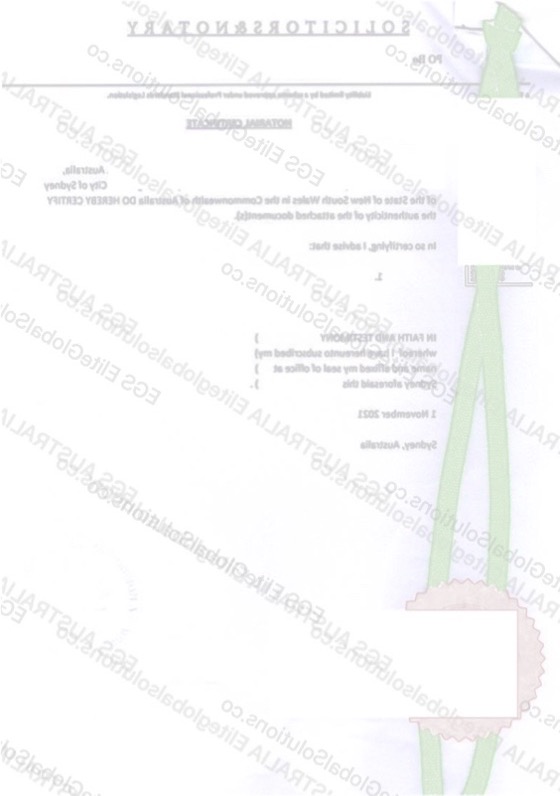 Australian Police Check for Use in USARedacted sample preview for a commonly reviewed cross-border document path. Final handling still depends on the receiving side and the document setup.
Frequently asked questions
Is the AFP Digital National Police Certificate accepted for overseas use?
Generally yes, including for DFAT Apostille. The practical question is whether the final overseas receiver accepts the digital format. This should be confirmed with the receiver before submission.
Do I always need a fingerprint-based police check?
No. The standard name-based Digital National Police Certificate is the correct starting point for most overseas-use cases. Fingerprints are only appropriate where the final receiver specifically requires them.
How long does the apostille take?
EGS has completed AFP Digital National Police Certificate apostille handling within 1 business day for ready files. Timing depends on document readiness and whether additional consular or translation steps are required.
Does EGS decide whether the police certificate is accepted overseas?
No. EGS coordinates route review and preparation as an independent administrative intermediary. The AFP, DFAT, any relevant consulate, and the final receiving institution determine issuance and acceptance.
Compliance note
EGS is an independent administrative intermediary only. EGS is not a law firm, not a public notary, not a government authority, and does not provide legal advice. Route outcomes depend on the issuing country, destination country, authority rules, and the exact document setup reviewed.