Australian document guide
Power of Attorney Notarisation and Apostille in Australia
A Power of Attorney is one of the most common documents in cross-border matters. Where it is signed in Australia for use overseas, the real issue is not only drafting the document clearly, but making sure the signing, notarisation, and authentication pathway matches the expectations of the receiving authority.
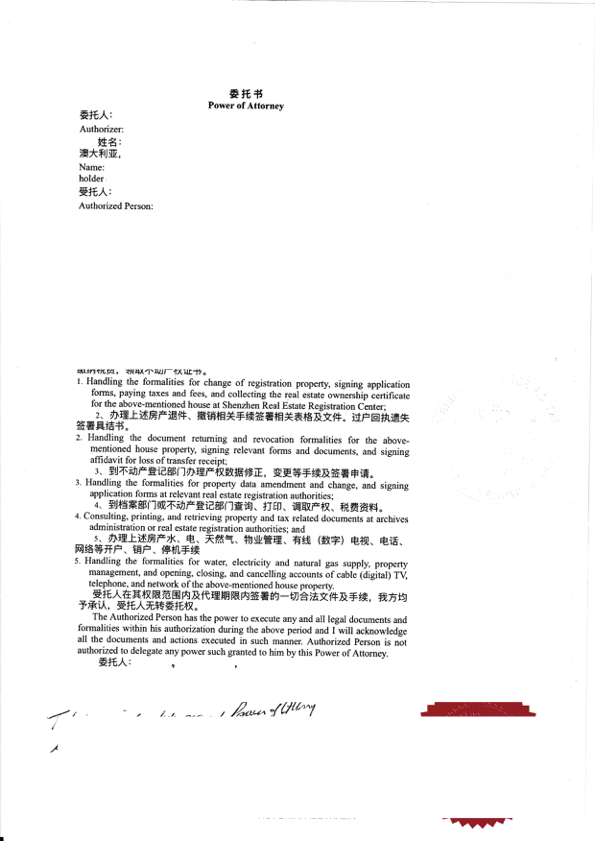
This guide is written for people who already have the document, or are about to obtain it, and need a practical answer rather than a generic description of international legalisation. The useful starting point is usually not the search term itself, but the actual file in hand, the country where it will be used, and the authority that will receive it.
In practice, power of attorney notarisation and apostille in australia matters are rarely solved by one label alone. Some files move relatively cleanly once the correct document version is identified. Others change route because of translation, document condition, notarial handling, destination wording, or the need to review a wider pack. That is why this guide treats the route as something confirmed after review, not assumed in advance.
Key points summary
- A power of attorney must usually be drafted with precision before anyone focuses on apostille or international use.
- For overseas use, signing alone is rarely enough. The practical chain often runs from drafting to signing, notarisation, apostille, and then destination-side submission.
- In-person signing is still the more robust option in higher-risk matters, while video signing may be available in some cases but should be assessed against final acceptance standards.
What apostille / authentication usually means here
In broad terms, an apostille is used under the Hague Apostille Convention to authenticate the origin of an eligible public document for use in another participating jurisdiction. In Australian practice, DFAT handles apostilles and authentications for eligible documents, but that does not mean every file a client holds is automatically ready for that stage.
The working issue is usually whether the document is the correct document class, whether it carries the right issuing structure, and whether the destination authority is actually asking for an apostille route, an authentication route, or some broader legalisation sequence. That is why this guide treats the route as review-led rather than keyword-led.
Who this guide is for
- Individuals signing a power of attorney in Australia for use overseas in property, litigation, banking, family, company, or administrative matters.
- Applicants choosing between in-person signing and video signing for a document that may later require notarisation and apostille.
- Clients who need the document to work in China or another Hague Convention jurisdiction and want the execution chain checked before signing.
What this document or record usually is
Power of Attorney routes usually start with the document class itself. The useful first question is whether the file is the formal, issue-ready version usually accepted for overseas use rather than a ceremonial, outdated, damaged, or informal copy.
For Overseas use use or broader overseas use, the document is commonly being reviewed as a public record first and a destination-use file second. That is why issue format and record provenance matter more than generic route wording.
Where names, dates, translations, or supporting identity records are involved, the document often needs to be reviewed as part of a wider filing pack rather than as a standalone page.
Common document types covered
- Power of attorney for property sale or transfer
- Power of attorney for banking, inheritance, family, company, or administrative use
- Signed authority document intended for notarisation and international use
Typical power of attorney pathway
For a power of attorney signed in Australia and intended for overseas use, the route usually starts with the final draft and the execution method. The useful first question is whether the document is in a form suitable for signing before a notary or another authorised witness, not whether the applicant has already been told the word apostille.
Once the document is ready for execution, the next question is whether the receiving country or institution will accept an Australian notarial-apostille chain, a consular or official witnessing route, or a more specific signing model. That is why execution method and destination use should be checked together from the start.
- Draft first, sign second.
- Treat signing method as part of the route, not as a separate detail.
- Check the receiving authority before assuming that video signing or a simplified chain will be accepted.
What we usually need before review
- Unsigned power of attorney draft in its final or near-final form
- Valid passport or other government-issued photo identification
- Current residential address details
- Full details of the attorney or authorised representative
- Any supporting material about the underlying matter, such as property, bank, court, family, or company details
Original hard-copy notes
As a general rule, the document should not be signed in advance unless the responsible professional or authority has specifically instructed that approach.
What is a power of attorney?
A power of attorney is a document by which one person authorises another person to act on their behalf in relation to specific matters. In cross-border use, it is commonly required where the principal cannot attend in person and needs another person to deal with property, litigation, banking, family, company, or administrative affairs.
To work properly, the document usually needs to identify the principal, the attorney, the specific authorised acts, the scope of authority, the validity period, and any limitations or conditions. A vague or overly broad document may still be rejected even if the signature has been properly notarised.
Why notarisation and apostille matter
For international use, signing the document alone is usually not enough. In Australia, notarisation is generally carried out by a Notary Public, who verifies identity, witnesses signing, and applies the notarial seal or certificate to confirm the execution process.
If the document will be used in another Hague Convention jurisdiction, apostille may then be required. In Australia, apostilles are issued by DFAT and confirm the authenticity of the Australian notary’s signature and seal so the document can be recognised internationally.
Main pathway 1: Australian Notary Public and apostille
This is the most broadly recognised route for documents signed in Australia and intended for use overseas. Under this pathway, the power of attorney is signed before an Australian Notary Public, notarised in Australia, and then submitted for apostille where required.
It is often suitable where the document will be used in China or another Hague member jurisdiction, where the matter involves property, litigation, or significant legal rights, or where the receiving institution expects a formal Australian notarial chain.
Main pathway 2: consular or other official witnessing routes
In some cases, applicants may look at a consular or other official witnessing route instead of the standard notarial-apostille chain. Whether that route is available depends on nationality, residence status, document purpose, and the final receiving authority.
This pathway may be more limited in scope and may not be suitable for all powers of attorney, especially where major property disposal, significant financial interests, or institution-specific formalities are involved.
In-person signing vs video signing
In-person signing remains the traditional and most widely accepted model. It is usually preferred for property-related authorities, high-value or sensitive legal matters, and cases where the receiving side is likely to scrutinise the execution method closely.
Video signing may be available in some circumstances and can offer flexibility for applicants who are far from major city centres or face travel or scheduling constraints. Even where it is legally possible, the more important question is whether the final recipient will accept it without hesitation.
What to prepare before you start
The strongest starting point is usually an unsigned draft, clear ID, the attorney’s full details, and the supporting facts behind the matter itself. That makes it easier to decide whether the case is suitable for an ordinary notarial-apostille path, a more cautious in-person route, or a more limited video-signing model.
Where the document will be used in a non-English-speaking jurisdiction, translation should also be considered against the exact institution that will receive it rather than assumed in the abstract.
How EGS helps
EGS assists clients with the coordination side of cross-border document preparation. For power of attorney matters, this may include reviewing the country of use, helping identify the likely notarisation and apostille path, assisting with bilingual document preparation, and coordinating the next practical steps for international use.
Our role is administrative and procedural. We focus on structure, clarity, and reducing avoidable delays caused by incomplete preparation or mismatched document pathways.
Common rejection risks or review flags
- Using the wrong power of attorney version or assuming an older copy is automatically good enough for overseas use.
- Starting translation or lodging based on a destination assumption before the receiving authority or use case is clear.
- Missing supporting identity, name-alignment, or destination-side requirement details that change the route after review.
What customers should prepare before intake
- Clear scan of the document front and back, or the digital file if the issuer supplied one
- Destination country and the authority, employer, university, registry, or other body that will receive it in Overseas use
- Any instruction that mentions apostille, authentication, legalisation, attestation, translation, embassy, or notarisation
- Any supporting identity or company record that affects names, dates, or corporate details on the file
Timeline notes
Timing depends on whether the draft is already settled, whether signing can be arranged quickly, and whether apostille or translation is needed after notarisation.
Where video signing is being considered, extra procedural checks may affect timing because acceptance and execution requirements are not the same in every case.
Fee notes
The overall cost may include drafting support, signing logistics, notarial handling, apostille, translation, courier, and destination-side preparation costs depending on the matter.
EGS charges only for administrative and procedural coordination as an independent intermediary.
When extra steps may be required
- Translation may still be required even after notarisation and apostille if the receiving authority does not accept an English-only document.
- In higher-value or more sensitive matters, the receiving institution may scrutinise the signing method closely, especially where remote execution is involved.
- A consular or official witnessing route may be available in some cases, but it is usually narrower in scope and should be checked carefully before relying on it.
Next step
Move from reading into route check or intake
Typical next step
Before paying for a route, prepare the exact document version you have, identify the receiving country and authority, and move into route check so the file can be assessed against the actual destination requirement.
What to prepare before intake
- Clear scan of the document front and back, or the digital file if the issuer supplied one
- Destination country and the authority, employer, university, registry, or other body that will receive it in Overseas use
- Any instruction that mentions apostille, authentication, legalisation, attestation, translation, embassy, or notarisation
- Any supporting identity or company record that affects names, dates, or corporate details on the file
Route uncertainty note
A route cannot be confirmed safely from the document name alone. Final handling is typically confirmed after review of the document version, destination, receiver instructions, and any extra requirement such as translation, notarisation, or consular follow-up.
Frequently asked questions
Is signing the power of attorney enough for overseas use?
Usually not. In many international-use cases, the document also needs notarisation and may then require apostille or another authentication step depending on the destination.
Is video signing always acceptable?
No. Video signing may be possible in some circumstances, but final acceptance depends on the governing framework and, importantly, on whether the receiving institution will accept a remotely witnessed document without difficulty.
Should the document be signed in advance?
As a general rule, no. The document should usually remain unsigned until the responsible professional or authority confirms the execution method.
Can EGS issue notarial certificates or apostilles?
No. EGS is an independent document coordination service provider. EGS is not a law firm, not a Notary Public, and not a government authority.
Compliance note
EGS is an independent administrative intermediary only. EGS is not a law firm, not a public notary, not a government authority, and does not provide legal advice. Route outcomes depend on the issuing country, destination country, authority rules, and the exact document setup reviewed.